Kyocera invests in the future of ceramic-to-metal assemblies technology
New manufacturing facilities, consolidated process expertise and the expansion of brazing technology are strengthening Mannheim’s position as a centre for sophisticated industrial and semiconductor applications.
- Fine Ceramic Components
Kyoto/Esslingen − Kyocera systematically expands its manufacturing expertise in ceramic-to-metal assemblies at its Mannheim site. By investing in state-of-the-art turning and milling technology and additional furnace capacity, the company is strengthening an end-to-end process chain: from ceramic components and high-precision metal machining, through joining, to specialist cleaning. Customers benefit from short coordination channels, a high degree of technical flexibility and reproducible processes, largely provided from a single source.
End-to-end manufacturing ensures process reliability
At its Mannheim site, Kyocera manufactures ceramic components, high-precision metal parts as well as the associated joining connections. The key production steps are closely aligned and implemented internally. This enables requirements relating to materials, tolerances, cleanliness and joint quality to be considered jointly at an early stage of the project. Integrated manufacturing reduces interfaces and external transport, speeds up technical feedback and increases process reliability.
Investments increase precision and capacity
By purchasing a new work machine, Kyocera extends its capabilities for the precise, end-to-end machining of complex metal components. The turning and milling centre facilitates the cost-effective production of complex geometries with as few set-ups as possible, thereby contributing to high dimensional accuracy and stable processes.
In autumn 2026, the company's machine park is set to be expanded to include a universal lathe. This will provide additional turning capacity and increase flexibility when dealing with different component sizes and production volumes. Furthermore, the addition of a new brazing furnace is planned for 2027. Kyocera thereby continues its expansion of capacity for complex brazing processes and creates the necessary conditions to meet growing production demands.
Expertise in materials for demanding applications
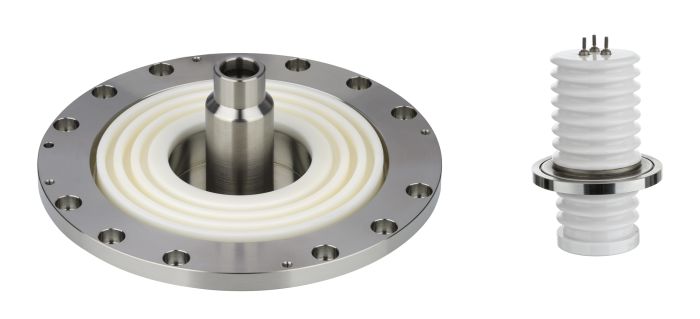
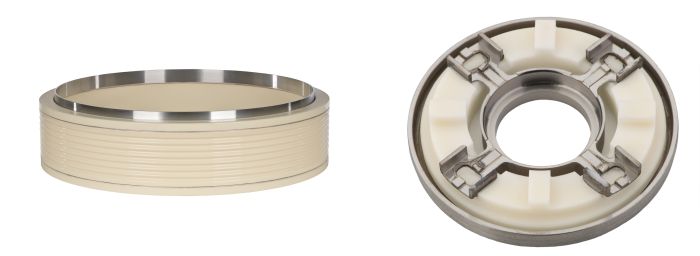
Ceramic-to-metal assemblies combine the electrical insulation, temperature resistance and wear resistance of technical ceramics with the mechanical functionality of metallic materials. The joints used include ceramic-stainless steel and ceramic-titanium joints, amongst others. For additional specialist processes, such as laser welding or electron beam welding, Kyocera works with qualified external partners where required.
The final precision machining of assemblies consisting of multiple joined components following brazing and welding processes is an established part of the manufacturing process. During this process, any thermal distortion is specifically compensated for, with the aim of maintaining tight dimensional, form and positional tolerances and achieving a high degree of repeatability.
From semiconductor manufacturing to ultra-high vacuum
The ceramic-to-metal assemblies are used, amongst other things, in wafer inspection and metrology systems, plasma etching and deposition equipment, as well as in electron beam applications. Other areas of application include vacuum feedthroughs and assemblies for high-vacuum and ultra-high-vacuum systems, where leak-tightness, electrical insulation and long-term reliability are crucial.
Technical advice and professional cleaning
Kyocera supports customers right from the early stages of a project – from material selection and joining techniques, through production-oriented design, to the assessment of application-specific requirements. In addition, multi-stage cleaning processes are available at the site. Depending on the component and requirements, these include mechanical pre-cleaning, ultrasonic-assisted wet cleaning, deionised water rinses, alcohol-based precision cleaning and drying processes, right through to vacuum drying. As cleaning can be carried out immediately after machining, soldering or assembly steps, additional handling steps and potential sources of contamination can be reduced.